This is a day early but we won’t be able to do it Friday. Enjoy and Learn!
The warm-up is vital, especially in this freezing January weather. I worked at a fitness facility that had a gym, tennis courts, racquetball rooms, and a bar. As I walked around I would see people getting ready to play tennis. Many had knee braces, and tensor bands on their elbows or forearms. These were the individuals who walked in and started playing. The other members, without the braces and tensor bands I would always see warming up before playing.
A warm-up can be dynamic stretching: arm and leg swings, hip rolls, wrist and ankle circles, with stepping on the spot. Cold joints get injured (think of lifting or pulling something heavy in the freezing cold when you just step outside). Cardio exercises: treadmill, elliptical, cross-trainer (anything where you are standing up) at a low resistance are great for a warm-up. 5 minutes minimum, 10 minutes better. If you do martial arts and don’t have access to a cardio machine, do some of those warm-ups.
Cardio exercises: walk warm-up to jogging, cardio machines, swimming, biking, and sports with constant movement: soccer, tennis, racquet ball, hockey, road hockey, ringette, football, ultimate Frisbee. If you take too long of a break your heart rate goes down so I’m not including baseball. Cardio is getting your heart rate up past 70% maximum to build capillaries. This does not mean walking, hiking, baseball are not useful. Cardio, if you don’t get enough or have enough nutrients can eat away at muscle instead of fat for energy. There is an argument that past 70% maximum heart rate your body burns blood sugar or muscle instead of fat because there isn’t enough oxygen kept inside to burn the fat. We’ll see if we can get someone more knowledgeable to explain the difference between building capillaries and fat burning. Any movement is better than nothing! If you move you get your blood flowing taking out used up nutrients (waste) and putting knew ones in (rebuilding tissue).
Try not to do aggressive more than 3x a week so you avoid wear and tear (jogging 10 km plus, 30 minutes or more on a cardio machine at 80 plus of your maximum heart rate. You can do lighter cardio on the other days: 1-2 hour hikes, swimming leisurely, cardio machines on the fat burning mode. We’ll do a blog on cardio separately.
Exercises to Start with:
Squat (adaption: squat off bench or chair that is higher than knees)


Arla Kasaj, ND Photos: akwellness@gmail.com,
Taylor Norris RMT at unionwellness.ca
*All pictures belong to the models and twhealthhumor.com
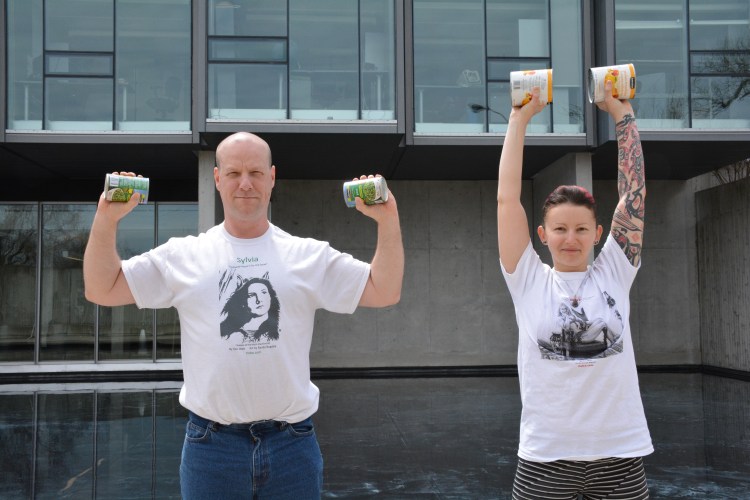
Standing Shoulder Presses (adaption: push ball or balls up wall)
WWW.WORDPRESS.TWHEALTHHUMOR.COM co-bloggers: Dan Watt (PT and author), Taylor Norris (RMT)
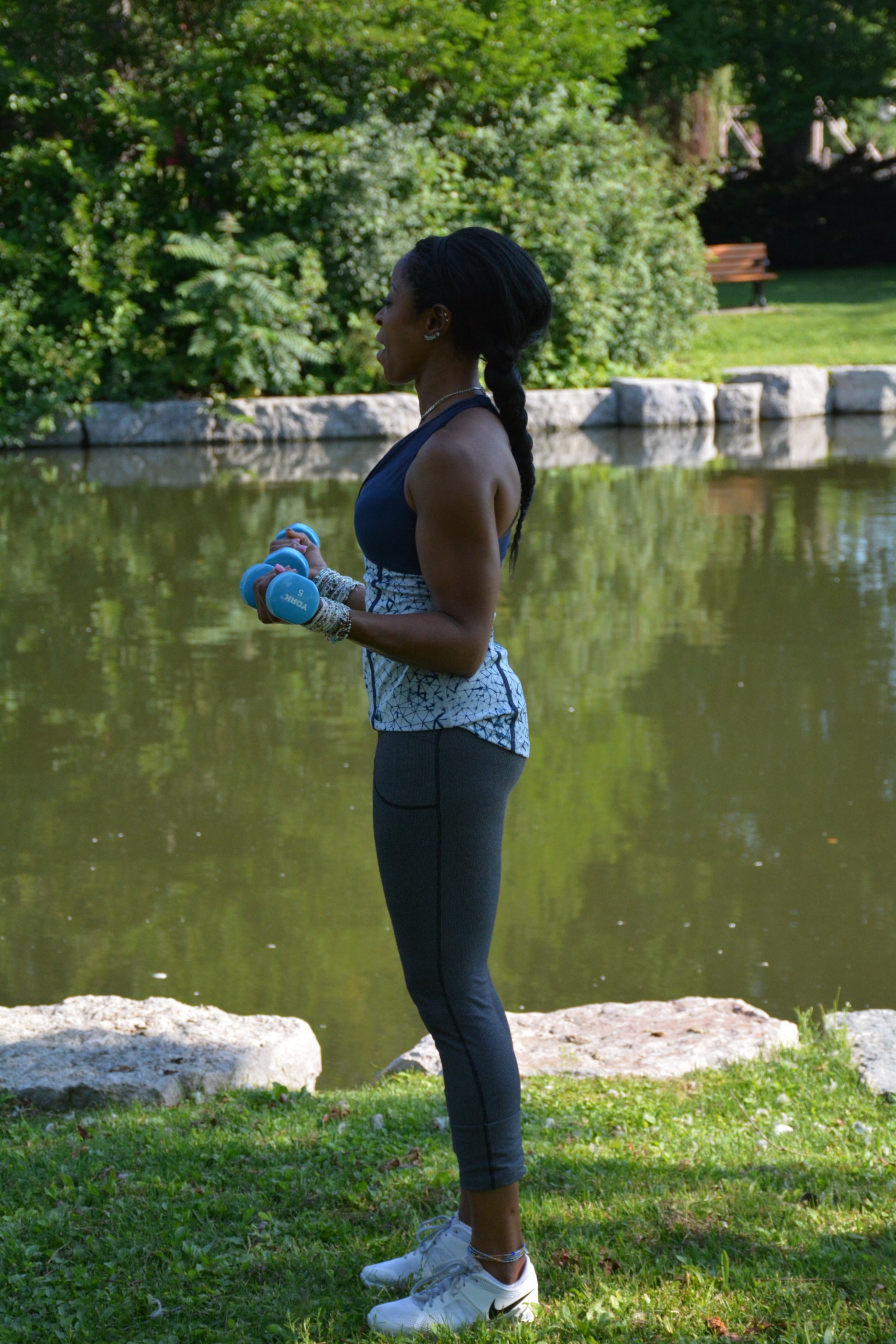
Standing Biceps Curls (adaption: sit and use your same side thigh to help raise the arm—this is if you have atrophy from an accident: warning: if you have biceps tendinitis you might not be able to do a biceps curl right away, try hammer curls and over time turn your palm up to work the biceps).


Gloria Antwi (PT): gloria.antwi@bell.net
Standing Overhead Triceps Extensions (adaption: do bent-over kickbacks if your shoulder flexibility or an injury won’t allow you to do triceps overhead, or lie on the ground and do skull crushers (don’t actually hit your head) where you keep your upper arm vertical and bend at the elbows so your lower arm (forearm) bends towards the side of your head and then extend it so your upper and lower arm aim towards the ceiling).


Lying Chest Press: (we demonstrate this standing up for ease but you have to limit your weight if you do that or use strength bands, adaption: do the exercise lying against a board on an incline—30-degrees if you have a problem getting up and off the ground)


Bent-over Back Rows: (adaption: if you just can’t get yourself into proper form put your free arm over a counter or the back of a chair with your chin on it)


Do this as circuit (each exercise done consecutively for 12-15 reps. Do 1-3 sets depending time and energy. You can use soup cans, dumbbells, or strength bands.
Static Stretches: Remember to relax the muscle(s) you want to stretch and keep your spine in alignment. Inhale to stabilize, Exhale to stretch further (if you feel a release).


Listen to your body. If you don’t feel comfortable performing an exercise or hurts (especially a joint) STOP! Re-evaluate but if you just don’t get it or feel comfortable, try to learn more about it.
See you in a couple of weeks!


 NWHealthFitness