Standing Leg Workout
By Dan Watt,
Co-Blogger for twhealthhumor.com, ACE Level 2 Trainer, and
Author of fantasy-fiction kobo.com e-books Ruby Queen and Sylvia
Be careful if you try this routine, especially if you have poor balance or knee problems. Only ever go to your comfortable “full range” of motion and have a wall or something immoveable nearby you can put your hand on if you are not familiar with these exercises. I can’t watch you, so don’t do an exercise if you are not comfortable with it. Thus, the value of a good personal trainer.
Warm-up by stepping on the spot, going for a short walk, 5-10 minutes light intensity on a cardio machine.
Stretch your calves, hamstrings, quadriceps, and hip flexors. NEVER force a stretch or you could cause damage to the ligament, cartillage, or tendon!
All exercises can be done for 12 reps each leg. Or if you find that easy try adding an extra set of 12 reps.
Inhale to stabilize (the descent when your squating), exhale for exertion (the ascent when your standing from a squat). Make sure you are breathing. Little stars before your eyes and dizziness are not good!
We’ve tried to teach you about proper posture, breathing, and body mechanics, so listen to your body and start each movement diligently. We want you to have safe, effective results, so pay attention. We are not responsible if you hurt yourself.
See cool down stretches at end. Remember: if the muscles relax, exhale to gently stretch forward (don’t inhale).

Taylor Norris, RMT, and co-blogger of twhealthhumor
Calve stretch
Krystal (Hamel) Gohl
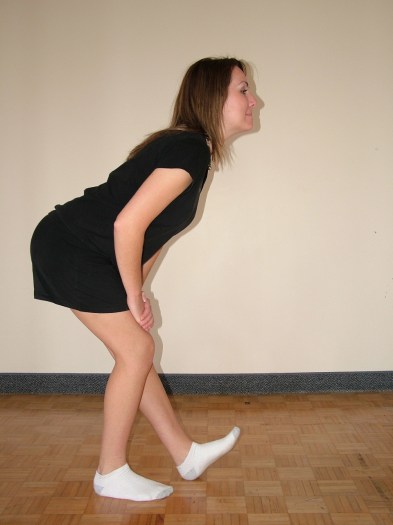
Hamstring Stretch

Quad Stretch
If you are not comfortable stretching your quads this way place your foot on a stair and slowly move up the steps or put your foot on a stable surface.

Hip Flexor Stretch
Arla Kasaj, ND akwellness@gmail.com,
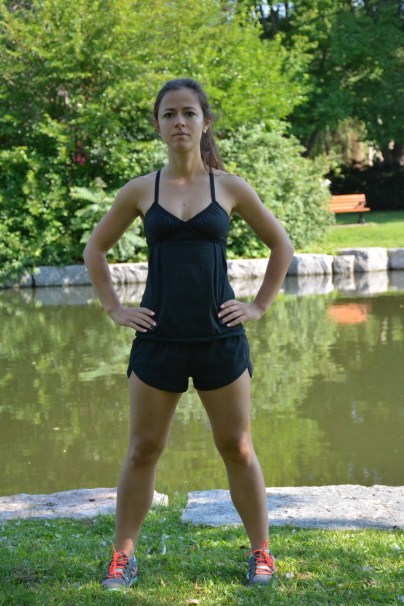
Start with Squats. Your tummy should be slightly in the entire time to protect your lower back (in not crunched look at Arla’s spinal alignment).
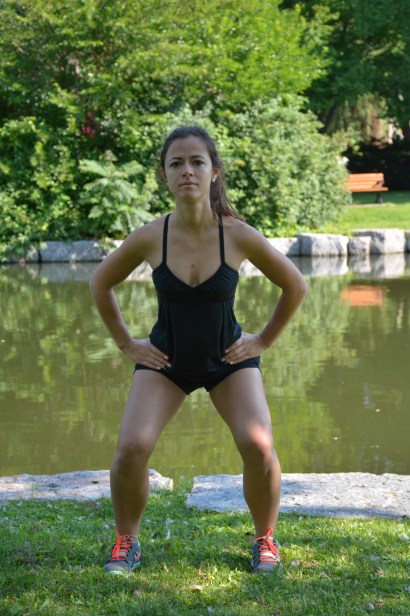
When squatting the weight should go in your hips, never your knees or lower back.


If you feel fine squatting and shoulder pressing try them in combination. Press the weights up more with your legs than your shoulders. Make sure the tummy is slightly drawn in as you press up.


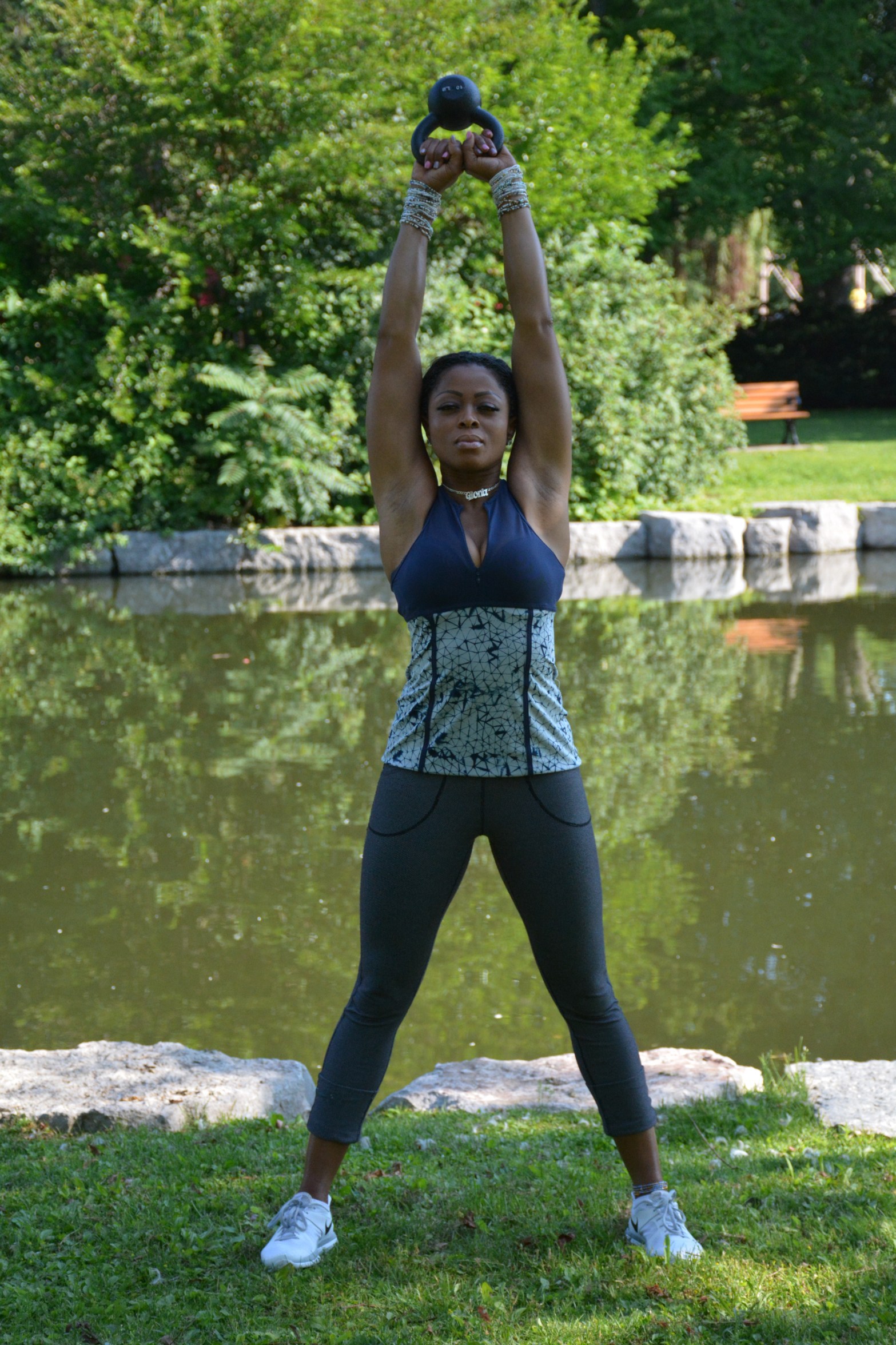
Gloria Antwi, PT gloria.antwi@bell.net


Squat-swing (you can use a Dumbbell, weight plate, soup can etc. if you don’t have kettle bell). Absolutely make sure you inhale as you lift the weight over your head so you do not hurt your lower back. DON’T lean too far back!


Stationary Lunges
Your weight should be equally distributed between your front and rear leg. Only lower yourself to comfort. Never lift the forward foot’s heel, or let the knee go over the toes. The rear leg’s heel should be up. There should be no pain in your knees, ankles, or lower back.

Side Lunge (one side at a time) Start from standing position and step to one side into a sumo squat.

Finish off floor stretches to cool off and help with recovery.
All pictures are the property of twhealthhumor and the models in them.
Make sure you do the above stretches with both legs.
Now you can feel accomplished and relax!
 NWHealthFitness